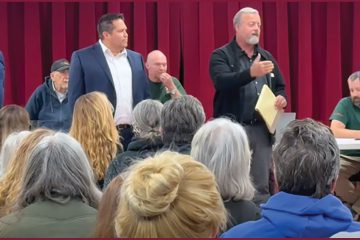
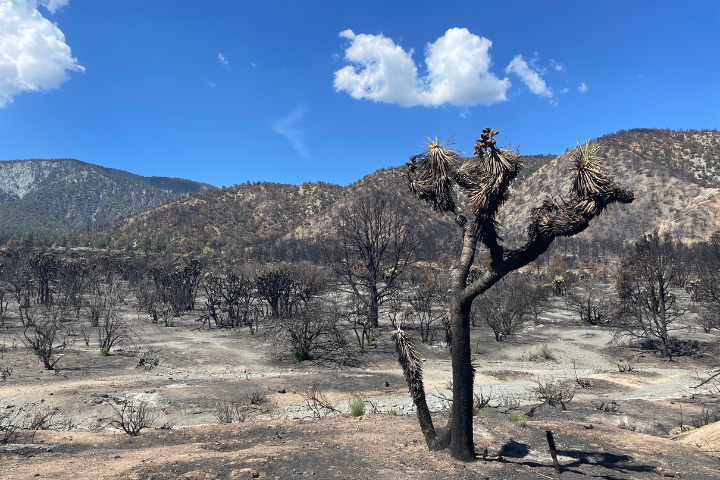
The Wrightwood Fire Safe Council hosted its monthly meeting on Aug. 20 in Wrightwood, which included a presentation by the Angeles National Forest seeking community input on the proposed Sheep Fire Restoration Project, a plan to rehabilitate some of the land burned by the Sheep Fire in June of 2022.
The presentation of the proposal for the Sheep Fire Restoration Project was given by Tracy Hall, the district archaeologist for the San Gabriel Mountains National Monument. Since the Sheep Fire Restoration Project is in the early planning stages and has not been approved for funding, the Angeles National Forest is first seeking public comments from the community on what should be included to restore the burn area. For now, here are some of the ideas included in the initial proposal.
Phase One
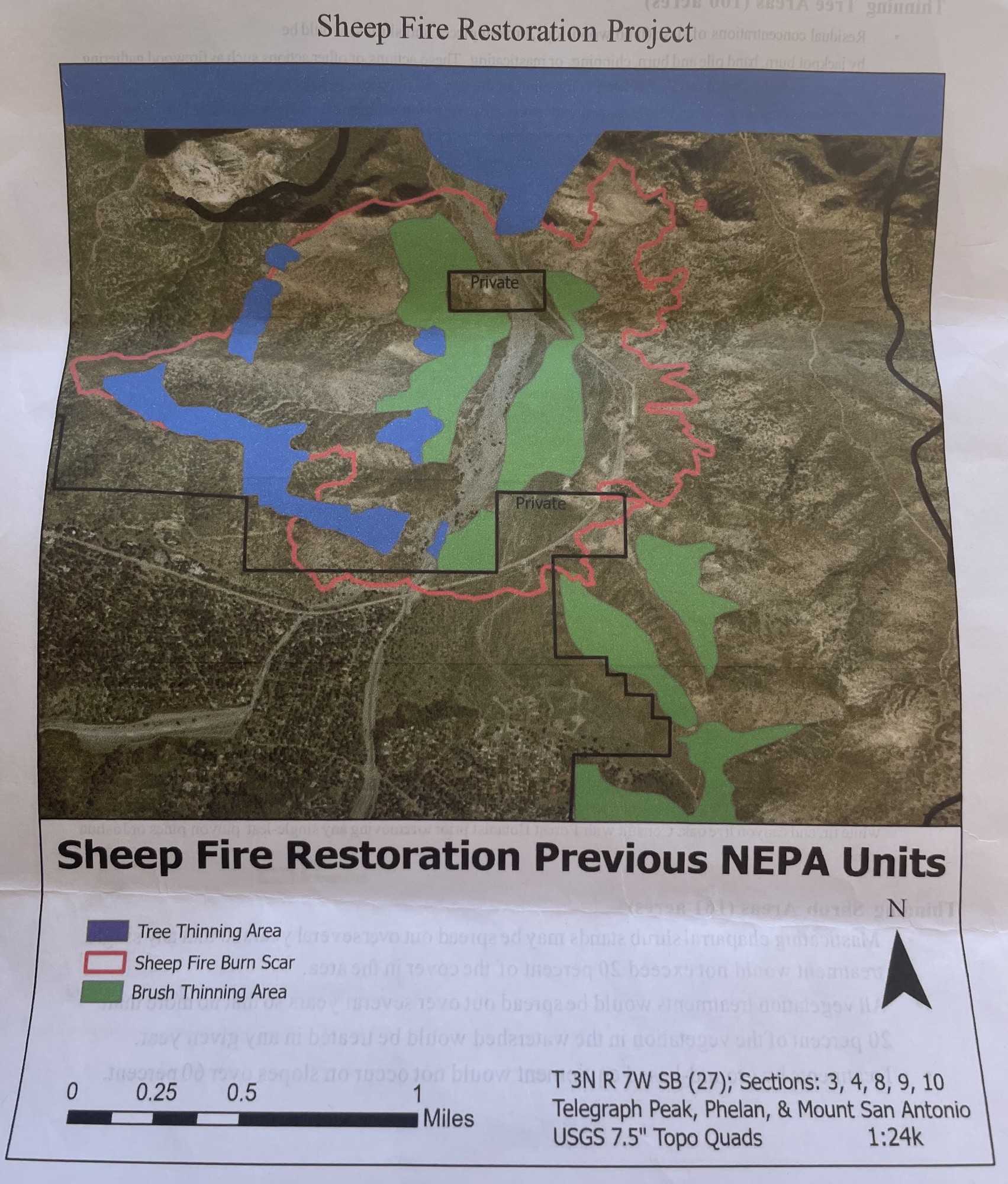
The project will include Phase One, which is a general cleanup of the burn scar, focusing on tree and shrub thinning. Any broken tree limbs or tops will be removed, and the remaining trees, shrubs, and invasive species will be thinned out with either prescribed burns or cutting. This includes consulting with the Angeles National Forest botanist before removing any single-leaf pinyon pines or Joshua trees, as they are considered threatened species. According to Tracy, the Joshua trees have been successful in growing back, stating that “The Joshua trees are slow-growing, but they’re chugging along.”
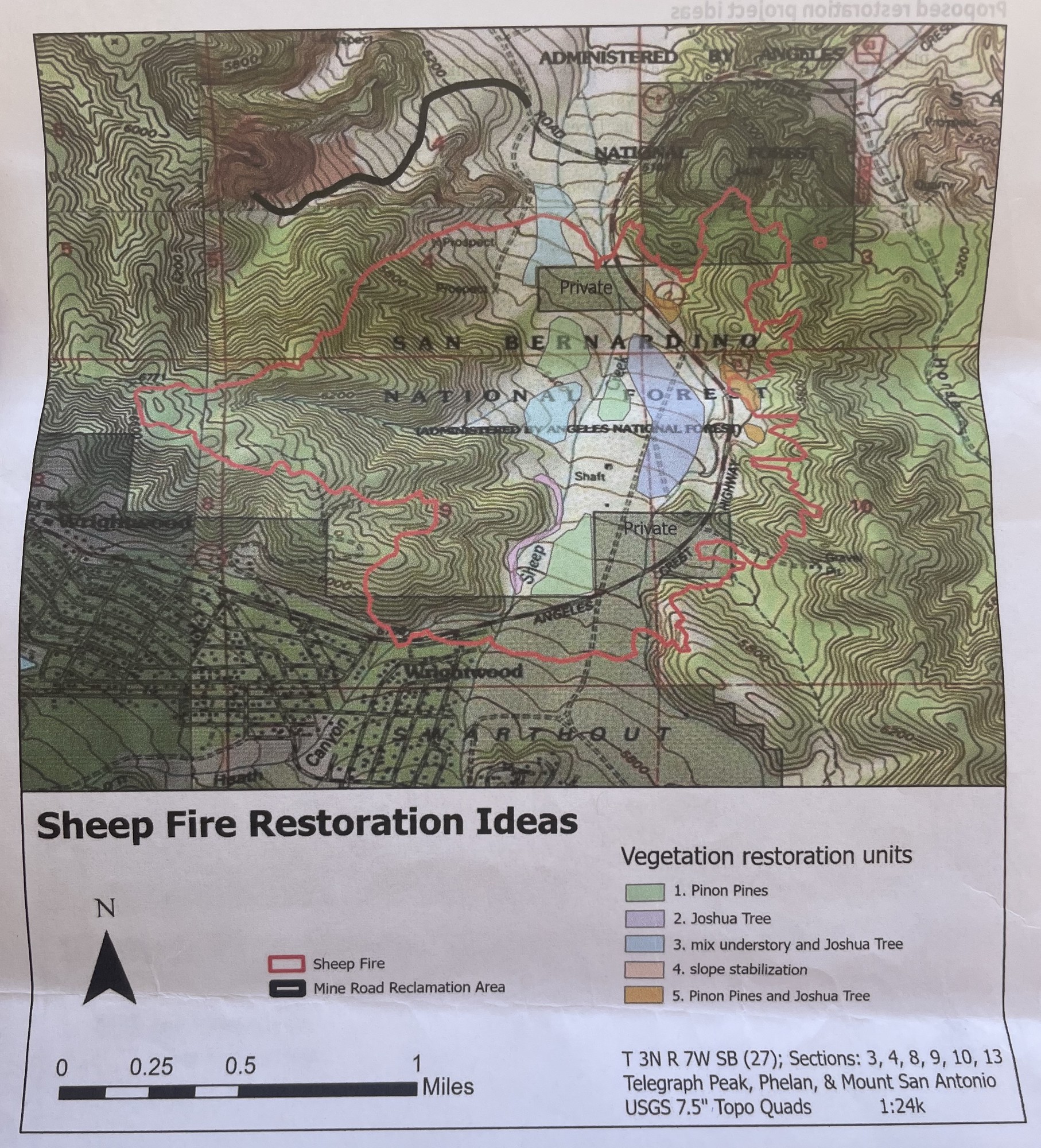
Also, any live trees that are cut will have Sporax (sodium tetraborate decahydrate) applied to their stumps to prevent infection by annosus root disease. See the map provided by the Angeles National Forest for specific areas focused on cleanup.
Phase Two
Phase Two of the project would focus on planting and re-establishing the vegetation of the burn scar area by planting pinyon pines, Joshua trees, native grasses, and shrubs. Planting will also help control erosion and stabilize slopes. Another key focus for restoration is to decommission and remove Quarry Road, which leads to the abandoned quarry accessible from Desert Front Road. The quarry has attracted some unfavorable activity in the past, including individuals setting off illegal fireworks or shooting guns and ammunition. Closing the road and reclaiming the landscape on the path will help diminish the misuse of this area and protect the mine, which is classified as an archaeological site under Angeles National Forest jurisdiction. The final part of this phase is to sell wood from the burned trees and restoration efforts as a resource for firewood that the community can utilize. The public will not be able to cut down trees or collect any wood themselves; instead, the firewood will be fully managed by the Angeles National Forest. Collecting wood or cutting down trees in the burn area is considered a crime. See the map provided by the Angeles National Forest on specific areas considered for replanting and restoration.
Comments and Concerns
Some of the community’s concerns from the meeting included protecting the native plants already growing in the burn scar, especially milkweed plants growing on the east side, which are essential for the monarch butterfly population. Another concern was the snow players and visitors who play along the highway during the snow season and may interfere with or damage the replanting efforts of the native pines or Joshua trees. With many valid comments, Tracy mentioned that she has a team of biologists, geologists, and botanists who will help plan for a possible course of action for these concerns. If anyone else from the community has any other concerns about the restoration project, they are encouraged to email their comments to Tracy Hall at [email protected].
The Sheep Fire Restoration Project is expected to take approximately three to five years to complete once the project is approved. The timeline and project initiatives will also depend on the amount of funding received from the government.