
At Transition Habitat Conservancy, we are working hard to help conserve pollinators and provide education about one of the most charismatic pollinators in the West: the monarch butterfly.
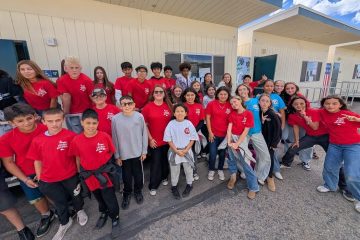
Our organization worked with our local Wrightwood nonprofit, Drawing Together, to teach ecology to grades K-6 via their Summer Art and Nature program. This two-week program, which just wrapped up on June 27, provided enrichment in the arts and science.
As THC’s natural resources biologist, I have been working on ways to bring nature-based education to our local community. This partnership with Drawing Together was a wonderful opportunity to provide the kids with a fun and interactive class!
We learned about plants and animals, their adaptations, habitats, life histories, and our local ecosystems—the San Gabriel Mountains and the Mojave Desert—as well as what science is, different types of scientific careers, and how to create their own experiments using the scientific method. We spent lots of outdoor time exploring, asking questions, thinking about why things are, and utilizing field journals and magnifying glasses. We observed the world by looking, talking, writing, drawing, and collecting specimens of seeds, leaves, and other “treasures.”
We, also, spent two days learning about pollinators and why they are crucial to our ecosystems and personal lives. The students were able to see and touch butterfly chrysalises, moth cocoons, and caterpillars and see live butterflies. They also learned that many other animals can be pollinators, like bats and hummingbirds.
The students learned that these animals are not just beautiful or interesting but vital to our survival. Pollinators enable plants to produce fruits, vegetables, and seeds, contributing to the food sources of countless species, including us. We use plants not only for food but for medicines, textiles, and many other key items we need to survive.
As one student pointed out, if it were not for pollinators, we couldn’t breathe. It took me a moment to follow his train of thought, but there it was, so simple: if pollinators did not pollinate the species of plants that require them to survive and reproduce, much of our vegetation worldwide would cease to exist. Flower-bearing plants regulate the percentage of oxygen in the atmosphere at a level where humans can survive. Too much or too little oxygen could cause health problems in humans. The kids were not the only ones who learned during our class.
Many pollinators are in trouble, both worldwide and here in California. The western monarch butterfly’s population has fallen by over 90% since the coastal winter counts were implemented. Much of this has to do with habitat loss, indiscriminate pesticide usage, which kills all insect species, and eliminating milkweed plants from much of the original habitat. Monarch butterfly caterpillars can only eat milkweed, which comes in many species and is the sole food source for this amazing creature.
The good news is that milkweed is incredibly easy to grow (hence the name). THC works with our board member Gina Charpentier to procure and grow native California milkweed species. The students received milkweed seeds to start their own butterfly gardens at home. It is easily grown in our Tri-Community. It dies back in the winter chill and returns in the spring. Our board member’s garden alone was responsible for 800 caterpillars and subsequent monarch butterflies at the coastal count one year! This is truly an example of “one person can make a difference.”
By creating our own butterfly gardens at home, we create connecting pieces of habitat. This is exactly what monarch butterflies need. If you are interested in starting your own garden at home (pots work just as well as ground), please read through Monarch Joint Venture’s information and reach out to Monarch Queen Nursery in Oak Hills if you would like to purchase milkweed.
If you are part of a homeschool group or co-op and would like to participate in guided hikes or classes or are an educator with our Snowline district looking for supplemental education or field trip opportunities, please contact Sarah Berryman at [email protected].