Watering is one of the most important parts of plant care, yet it is often misunderstood. Trees, shrubs, and garden plants all depend on water for healthy growth, nutrient uptake, and resistance to stress. However, successful watering is not just about giving plants more water. It is about understanding when to water, how deeply to water, and how often different plants need attention. Good watering practices help roots grow strong, improve drought tolerance, and reduce the risk of disease and plant decline.
Why Proper Watering Matters
Proper watering supports every basic function in a plant. Water carries nutrients from the soil to the roots and throughout the stems and leaves. It also helps plants maintain structure and stay productive during warm weather. When watering is done correctly, roots grow deeper into the soil, making trees, shrubs, and plants more stable and more able to survive dry conditions. On the other hand, poor watering habits can cause shallow roots, weak growth, yellowing leaves, wilting, and root damage. Both too little and too much water can harm a plant, which is why balance is essential.
Factors That Affect Watering Needs
There is no single watering schedule that works for every landscape. Water needs depend on plant type, age, soil texture, weather, sunlight, wind, and season. Newly planted trees and shrubs need more frequent watering because their roots are still limited to the planting area. Established plants usually need less frequent but deeper watering. Sandy soil drains quickly and may require more frequent watering, while clay soil holds water longer and must be watered slowly to prevent runoff and water-logging. Hot, windy weather increases water loss, while cooler or rainy conditions reduce the need for irrigation. A gardener must observe the soil as well as the plant instead of relying only on the calendar.
Watering Trees
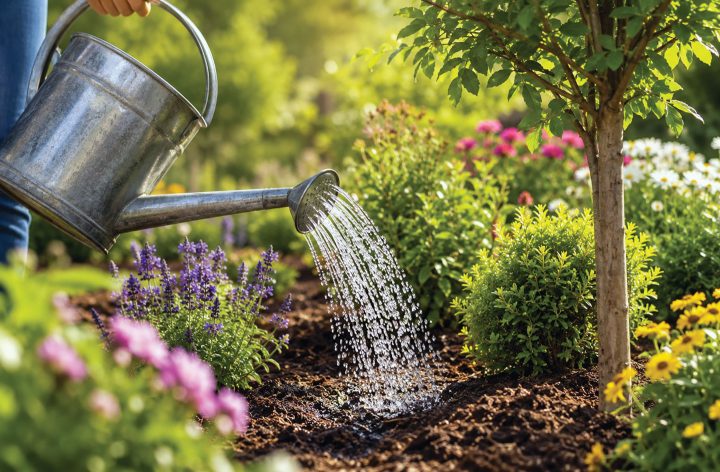
Trees require deep watering because their root systems extend well below the surface. Newly planted trees should be watered immediately after planting and checked often during the first weeks and months. Guidance from university extension sources commonly recommend frequent watering early on, then gradually reducing the frequency as the roots establish. Instead of light daily sprinkling, it is better to water slowly and deeply, so moisture reaches the root zone. Mature trees usually need less frequent watering, but they still benefit from deep soaking during long dry periods. Water should be applied near the dripline rather than only at the trunk, since many absorbing roots are located away from the base. Mulch around the tree can also help conserve moisture, but it should be kept away from the trunk to prevent rot.
Watering Shrubs
Shrubs also need careful watering, especially after transplanting. Because shrubs vary greatly in size and species, their water needs can differ, but the general rule is to keep the root zone evenly moist without making it soggy. Newly planted shrubs often need regular watering until they become established. As with trees, deep watering is more effective than frequent shallow watering. Shrubs planted close to buildings, under roof overhangs, or in windy areas may dry out faster than expected because they receive less natural rainfall. Established shrubs usually perform well with occasional deep watering during dry weather. Applying mulch around shrubs reduces evaporation, helps moderate soil temperature, and improves overall water efficiency.
Watering Garden Plants
Garden plants, including flowers, vegetables, and smaller ornamentals, usually need more frequent attention than trees and shrubs because their roots are often shallower. The best practice is to water the soil directly rather than wetting the leaves, which can encourage disease. Morning is generally the best time to water because it reduces evaporation and allows leaves to dry during the day. Deep watering remains important even for smaller plants, as it encourages stronger root growth. Containers and raised beds may dry out faster than in-ground plantings and may need closer monitoring. It is also wise to adjust watering based on rainfall and seasonal temperatures, since overwatering can be just as harmful as drought stress.
Signs of Overwatering and Underwatering
Plants often show visible signs when watering is not balanced. Under-watered plants may have dry soil, curled or wilted leaves, brown edges, slow growth, or leaf drop. Overwatered plants may also wilt, but the soil often stays constantly wet, and leaves may turn yellow or feel soft. In serious cases, overwatering can lead to root rot, fungal growth, or a sour smell in the soil. Because some symptoms can look similar, checking soil moisture below the surface is one of the most reliable ways to decide whether water is needed. A healthy watering routine depends on observing both the plant and the condition of the soil.
In conclusion, watering trees, shrubs, and plants require knowledge, attention, and consistency. The most effective approach is to water deeply, monitor soil moisture, and adjust practices according to plant age, soil type, and weather conditions. Newly planted landscapes need closer care, while established plants benefit from less frequent but thorough watering. By understanding the different aspects of watering, gardeners can promote healthier roots, stronger growth, and more resilient landscapes over time.