When you picture a butterfly, what do you see? Perhaps a favorite you saw in your childhood, or one you’ve come to know as an adult. Many people might picture a large black-and-white butterfly. If so, you might be picturing a monarch butterfly (Danaus plexippus). This species of butterfly can sometimes be mistaken for a painted lady (Vanessa cardui), but there is a definite size difference between the two.
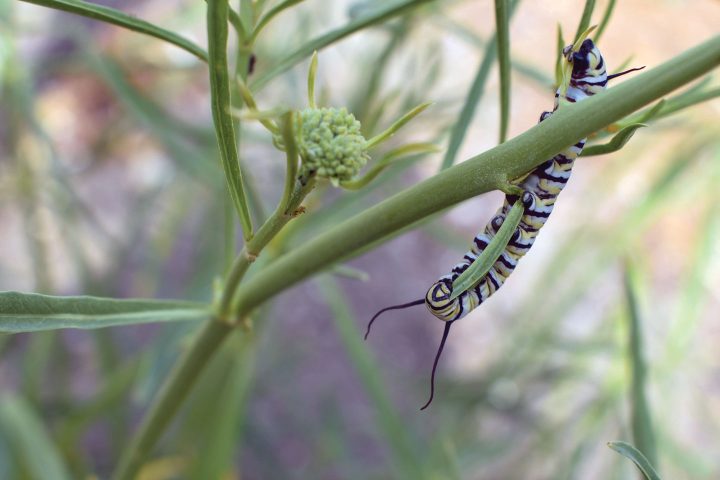
The monarch butterfly starts out, as all butterflies do, as an egg, then a caterpillar. If you’ve had the pleasure of having a garden with these charismatic butterflies, you know that the caterpillars start out so small you can hardly see them. As they eat milkweed and grow, their bright yellow-and-black stripes start to show, and they get quite large. This is the stage when most of us really start to notice them. The monarchs start showing up in our neighborhoods around late spring or early summer and can hang around until late summer or early fall. They cannot survive freezing temperatures, so they do what many folks do and head to the beach.
Our Western monarchs are actually different from the monarchs you hear about east of the Rocky Mountains across the rest of the U.S. Our monarchs only overwinter along the coast of California, in some very specific places. They travel across the Western states, but they rely on California’s temperate coast to survive the winter. Their life cycle is based on four distinct generations. The first generation, born to the overwintering monarchs, heads deeper into the Western U.S. to breed. The second and third generations survive the summer and fall, and breed and live where they were born. The fourth generation is a sort of “super” generation and can live up to nine months. These are the monarchs that overwinter on our California coastline and then complete their lifecycle for the next generation of monarchs. The fourth generation of the Eastern monarch is the one that travels all the way to Mexico to overwinter each year.
Our Tri-community area is very lucky to have the milkweed plant grow naturally, and so we have monarch butterflies. Milkweed is an umbrella name for a genus of plants. More specific than a genus is a species. We have a few different species of milkweed that are native to our region. Two examples are California milkweed (Asclepias californica) and woolly milkweed (Asclepias vestita). These milkweed plants grow at different elevations, with California milkweed growing at higher elevations in our area than woolly milkweed. We also get pockets of narrowleaf milkweed (Asclepias fascicularis), desert milkweed (Asclepias erosa), and woollypod milkweed (Asclepias eriocarpa), depending on where you live. A female monarch will only lay her eggs—one at a time—on a milkweed plant. This is because the caterpillar can only eat milkweed. It can eat any species of milkweed, but it has to be milkweed. Normally, most animals cannot ingest milkweed due to the milky white latex substance inside and the toxins that make it taste bitter. The caterpillars have evolved to utilize this substance, storing it in their bodies to protect themselves from predators as they grow. They are not harmed by ingesting it. Their colors—and the colors of the adult butterfly—act as a warning to predators, saying, “Hey, I’m highly visible and I do NOT taste good!”
Our Western monarch is not doing well, though. The population has dropped more than 90% since the 1980s. This is mostly due to habitat loss of their milkweed and the extensive use of pesticides. So, now that we know the problem, what can we as community members do about it? Well, as it turns out, a lot. One of our THC board members’ gardens, containing milkweed and flowering plants in pots, can yield 500 monarchs in one year. This is truly an example of how one person can make a difference. If we all create little pockets of milkweed and nectar-bearing flowers, we can help this species. A few pots on a patio or a small garden might not seem like a lot, but if we all did this, we could collectively contribute thousands of acres of monarch habitat across the state of California.
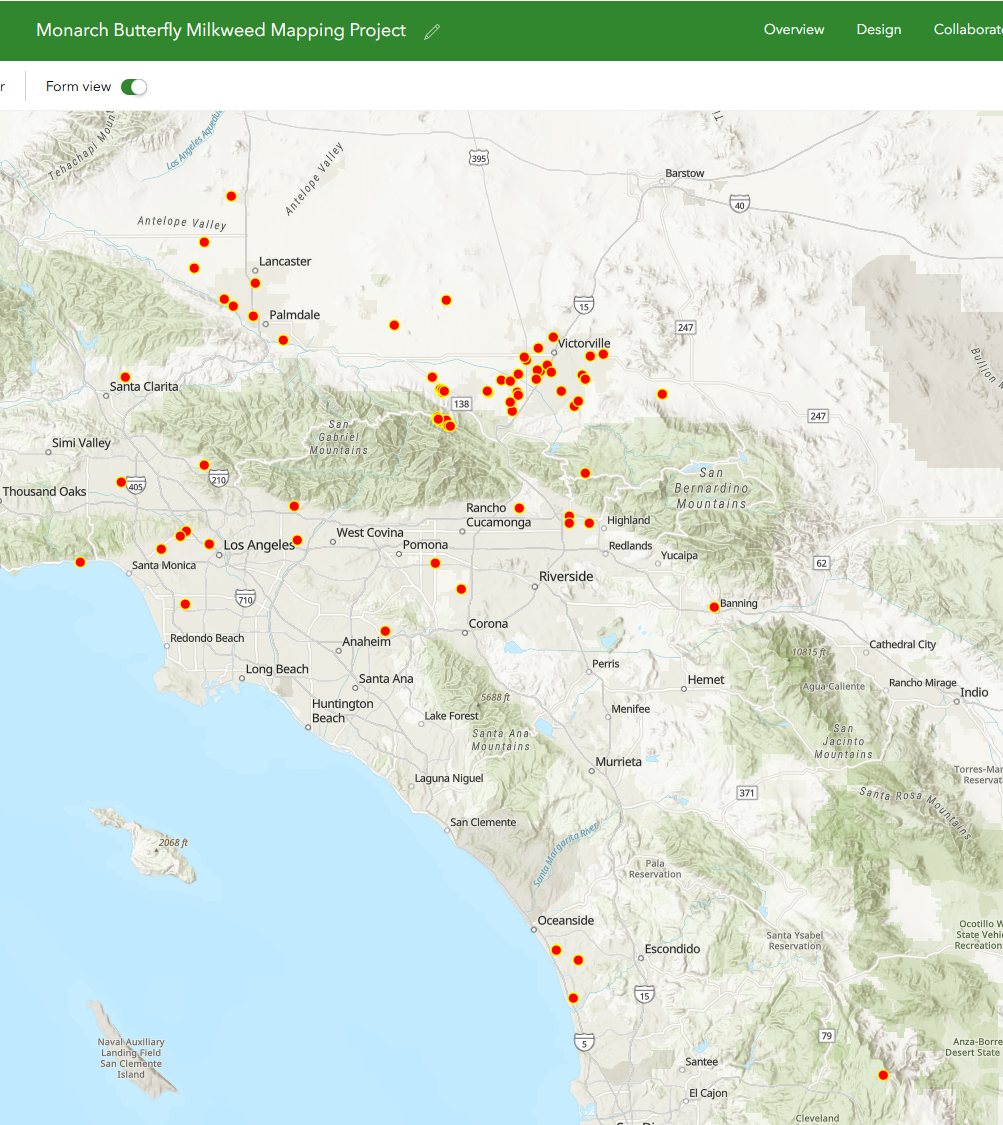
Every June, THC hosts a special monarch event to teach people about the monarch and how to create a garden at home (as well as other smaller workshops throughout the year). This year, we gave away milkweed plants to nearly 50 people, as well as milkweed seeds. We have heard back from folks who took milkweed from our event in 2023 and 2024, and some folks have already had visits from monarchs and caterpillars produced. We started tracking where the milkweed was being planted through this program and now have a map of all the locations where we have new pollinator gardens across SoCal.
So, how can you join this cause where you live? One of the easiest milkweed plants to keep alive and source at local native nurseries is the narrowleaf milkweed. When it matures, it is also very drought-tolerant. It also loves the sun. The tropical milkweed you see at big-box stores doesn’t directly harm monarchs, but because it is not native to this region, it does not always die back in the winter. This is important because pests that can live around the milkweed will attack monarch caterpillars. Our native milkweed needs to die back and get cut back in the winter to prevent pests from building up. Other than our local events, a great place to get narrowleaf milkweed is California Botanic Garden and other native suppliers. Or ask your local supplier to order narrowleaf milkweed. Great nectar plants include yarrows, buckwheats, asters, sages and more. Not all flowers are created equally when it comes to being good nectar plants for bees, butterflies and moths, so the Xerces Society and the Monarch Joint Venture are great places to source more information.
I started my own pollinator garden two years ago. It is now a source of great joy for me to see it grow each year. It is where I go to think, to relax from the day as I water the plants, and where I can now see so much life—everything from the plants, to the little beetles that use the mulch, to more pollinating insects than I ever imagined. I am getting to know them all and become familiar with the life that happens silently, right under our noses, all around us. I hope that you will be inspired to get a little slice of this for yourself to experience, and we can all marvel and be humbled by the little lives keeping this world running. You can also certify your garden as a Monarch Waystation with Monarch Watch. They walk you through the process, and your location goes onto a nationwide map of other folks across the United States doing the same thing as you.
Happy gardening, everyone.