
Local non-profit, Transition Habitat Conservancy is working hard, preserving the Mojave Desert. Learn about their recent projects and community engagement.
Transition Habitat Conservancy serves three separate project areas across the western Mojave Desert, including one right here in the Tri-Community area of Piñon Hills. This is where our office is located, as well as the 350-acre Puma Canyon Ecological Reserve. We open our reserve to the public and offer more than eight miles of hiking trails for equestrian and hiking use.
This area represents an ecotone, or blending of distinct plant communities—where the desert meets the mountains and where Joshua trees and cholla grow alongside majestic pinyon pines. Our mission is to preserve valuable areas like these because they are unique and limited in range.
A few months ago, we wrote about our newly conserved 326-acre Joshua tree woodland habitat in Llano, near the Los Angeles County line and adjacent to Piñon Hills. Since then, we have cleaned up the area, removing tons of illegally dumped trash and installing fencing to protect it from further dumping and unauthorized use. Some neighbors expressed appreciation for this work, saying their neighborhoods look better and their views are much more pristine.
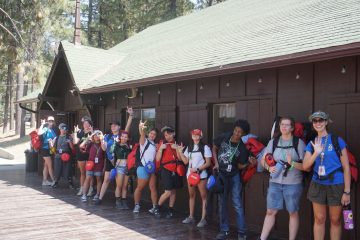
On Jan. 23 and 24, 2025, our staff, board members, partners, and public volunteers worked to restore illegal routes within the property so vegetation could recover. We used a technique called vertical mulching, developed by the Bureau of Land Management right here in the Mojave Desert. This process involves collecting dead plant material on-site, digging holes in the roads to decompact the soil, and planting dead branches into the ground. This accomplishes several goals: disguising the old route, providing a physical barrier to aid recovery, decompacting the soil, and creating microhabitats where windblown seeds can catch and grow instead of being carried away. Without intervention, it can take decades or longer for old routes to recover. Vertical mulching significantly speeds up the process.
After restoring multiple areas within the property, we spread and scratched in native seeds, including creosote, chia, four-wing saltbush, and ephedra. About two days later, the site received rain and snow during our most recent winter storm, which we hope helped anchor the seeds. We look forward to seeing growth over the next year. Many volunteers said they enjoyed getting exercise in a beautiful location and felt like they made a meaningful impact.
On Saturday, Jan. 25, we partnered with Wrightwood nonprofit Drawing Together to offer a free drawing class to the community. Wrightwood artist Chelsea Brummet led the class, teaching a full house how to draw desert tortoises, burrowing owls, and monarch butterflies. Artists of all ages attended and shared their love for local wildlife. We also brought our adopted baby desert tortoise so participants could see one up close and capture its details in their drawings. This class was made possible through our Art and Advocacy grant from the Conservation Lands Foundation. We will continue offering monthly workshops that combine art with nature education and appreciation through the end of 2025.
Also, registration for our new California Naturalist course, “Introduction to the Mojave Desert” is now closed, but you can join the waitlist for next year’s course by visiting our website.
For more volunteering or event opportunities, visit www.transitionhabitat.org. Sign up for our newsletter to stay up to date.