Local non-profit Transition Habitat Conservancy was recently awarded two grants to help aid threatened native species in the Mojave Desert.
Since 2005, the Transition Habitat Conservancy in Pinon Hills has been a vital land steward for the Mojave Desert and mountain transition regions. As an accredited land trust, the organization has protected habitats from being destroyed by over-development. Transition Habitat was initially founded to preserve land and has acquired over 10,000 acres within Los Angeles and San Bernardino County. The organization is now taking giant strides to proactively protect the precious ecosystems in Southern California. With funds from two recently awarded grants, Transition Habitat is making a significant impact by helping to combat the decline of the desert tortoise and monarch butterfly populations.
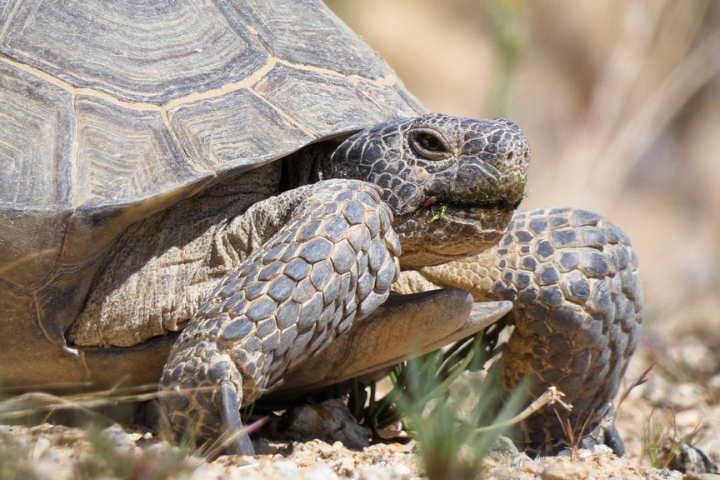
A notable $1.9 million grant from the California Wildlife Conservation Board was awarded to Transition Habitat in November for Desert Tortoise conservation and research. The funds are essential for studying the desert tortoise, and the data will help answer critical questions like where the tortoises are located, where they travel, and what attracts them to specific areas. Another benefit from this grant is that it allows Transition Habitat to continue working with renowned tortoise biologist Tim Shields and his company, Hardshell Labs Inc., in Barstow. Tim has been featured in the LA Times and The New Yorker for his cutting-edge technology, primarily used to fend off the desert tortoises’ most harmful prey: the common raven. Transition Habitat is excited to work with Tim in their Fremont-Kramer Desert Wildlife Management Area to better understand the tortoise and use innovative technology to conserve the species.
In fact, the desert tortoise happens to be one of the oldest living species in the desert, and according to the Center for Biological Diversity, “As many as 1,000 tortoises per square mile once inhabited the Mojave.” Today, there are less than ten desert tortoises per square mile. Transition Habitat’s Natural Resource Biologist, Sarah Berryman, mentioned that this is a serious concern; therefore, the time for immediate action to save the species from extinction is now. “The desert tortoise is such an iconic species, and it really represents the Mojave Desert. They’ve lasted through all of these ups and downs and have existed for millions of years. If we don’t help them to survive, then that’s a bad reflection on us [humankind],” said Berryman.
While their tortoise research will take place in the West Mojave Desert near Boron, locally in Pinon Hills at the Puma Canyon Ecological Preserve, work will soon begin for Monarch Butterfly conservation.. This project is made possible by a $230,000 federal grant from the National Fish and Wildlife Foundation, awarded to only 18 applicants in the entire country in December. Transition Habitat is extremely deserving of this exclusive grant due to the reserve’s location in a California State Priority 1 area, which is an early breeding zone for the Western Monarchs. Transition Habitat is committed to Monarch conservation and has hosted annual butterfly and pollinator events each June at Puma Canyon. The awarded grant will allow them to continue growing their monarch conservation efforts by restoring pollinator habitat, collecting and planting milkweed seed, and conducting research and surveys for milkweed success rates.
Our community is extremely fortunate to have the Transition Habitat Conservancy doing such amazing work right here in our own backyard and throughout the SoCal area. These awarded grants are just a few of the amazing accomplishments that the organization has achieved in order to protect local plants, animals, and habitats during this critical point in time when the immediate threats of climate change and the developing world are constantly affecting environmental ecosystems.
To learn more about the Transition Habitat Conservancy or to help volunteer to be a part of their meaningful projects, please visit their website at www.transitionhabitat.org. Also, follow them on social media through Facebook or Instagram.