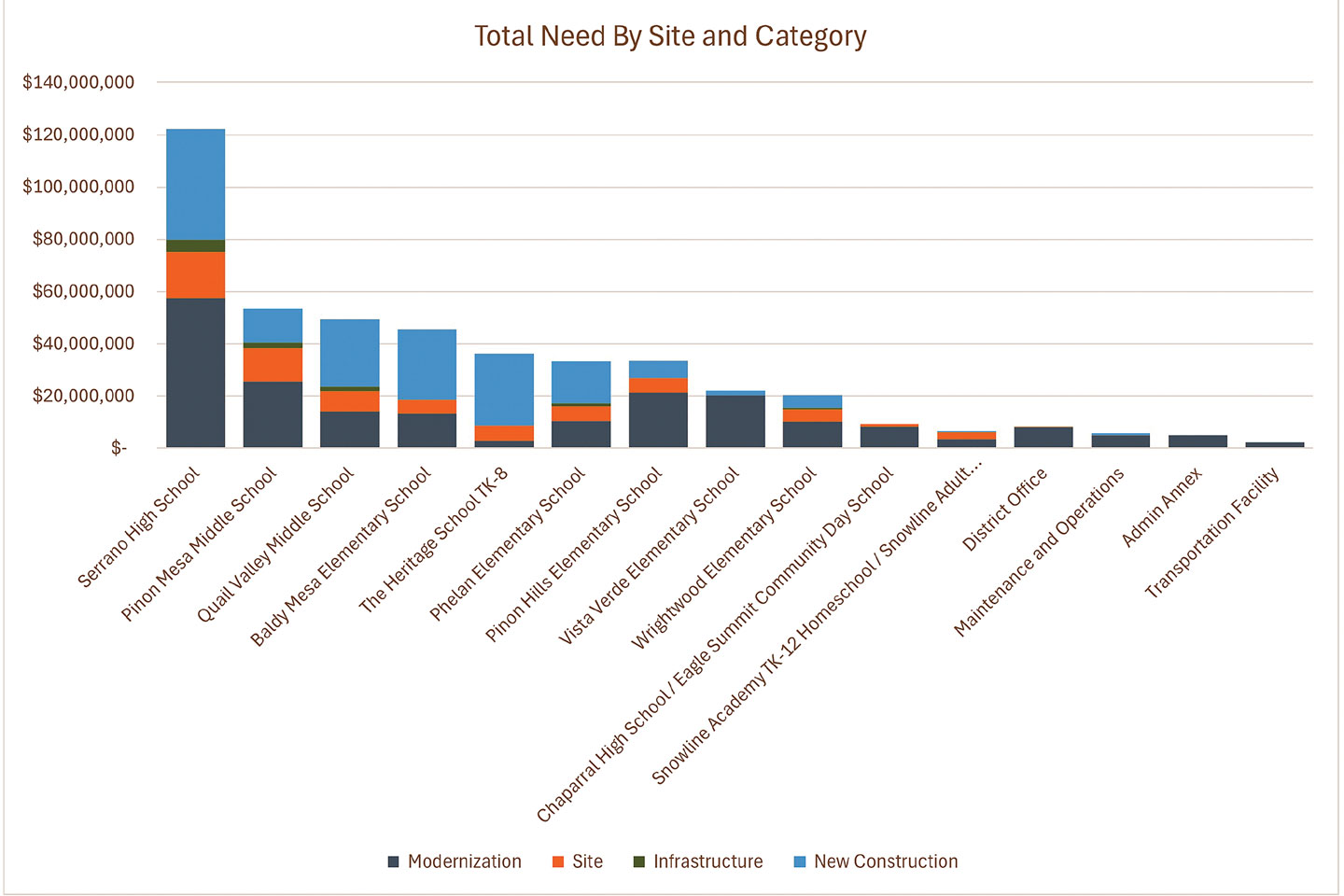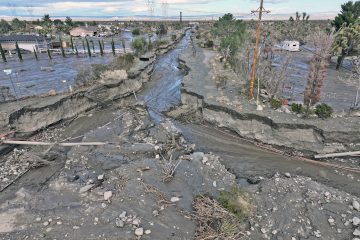

Snowline Schools has unveiled a $450 million, 10-year plan to revamp its facilities to address aging infrastructure and improve the learning environment. The plan focuses on critical issues, including deteriorating buildings, leaky roofs, outdated classrooms, and failing HVAC systems. At the June board meeting, Superintendent Ryan Holman emphasized the broader vision of the plan, stating, “We’re not just addressing what’s broken; we’re looking at how our schools can better serve students in the years to come.” The 2024 Facilities Master Plan is designed to update and modernize the district’s schools to address current infrastructure needs.
The district’s outdated infrastructure plays a major role in the development of this plan. Many buildings, such as those at Serrano High School, are well past their prime. Most of the district’s portable classrooms are more than 20 years old, presenting ongoing challenges in meeting modern educational standards. It has been a tricky balancing act for the district between maintaining old buildings and investing in new ones that support evolving teaching methods and learning environments. Serrano High is a primary focus for upgrades, with plans that include replacing old portable classrooms with permanent modular buildings, upgrading the septic system, and renovating the sports fields and surfaces to improve the overall functionality of the school facilities.
Other schools across the district, including Baldy Mesa Elementary, Wrightwood Elementary, and Phelan Elementary, are slated for notable improvements. Baldy Mesa Elementary is proposed to receive substantial upgrades, such as renovated fields, new playgrounds, shade structures, and energy-efficient buildings. Phelan Elementary, the district’s oldest school dating back to 1917, is set for a comprehensive overhaul, including replacing its septic system, modernizing facilities, replacing portables, and reconfiguring site access to enhance safety. Wrightwood Elementary, which opened its doors in 1928, is expected to receive critical enhancements, including a new freshwater supply system, modernizing permanent structures, replacing portables with modular buildings, and regrading playfields. Recognizing the varied needs of its schools, the district also sought extensive community input to ensure the plan reflects local priorities and values.
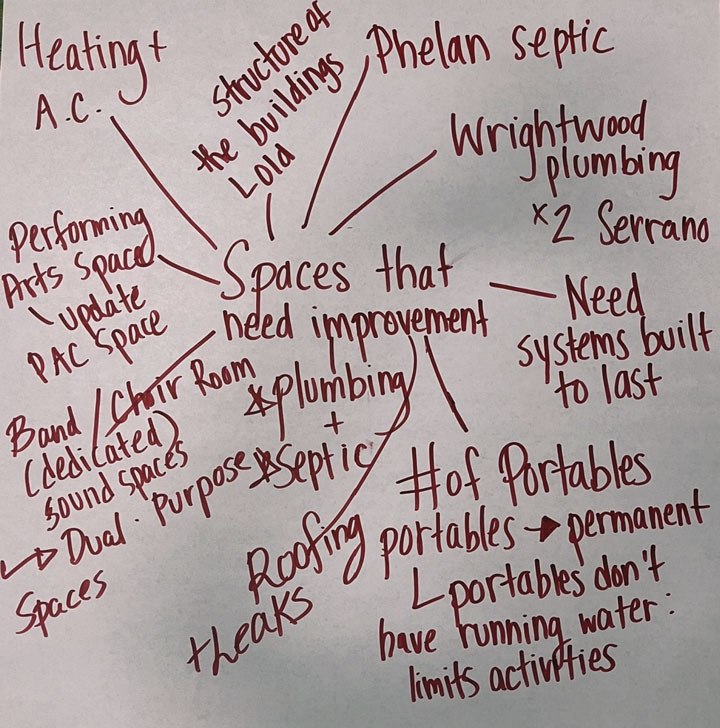
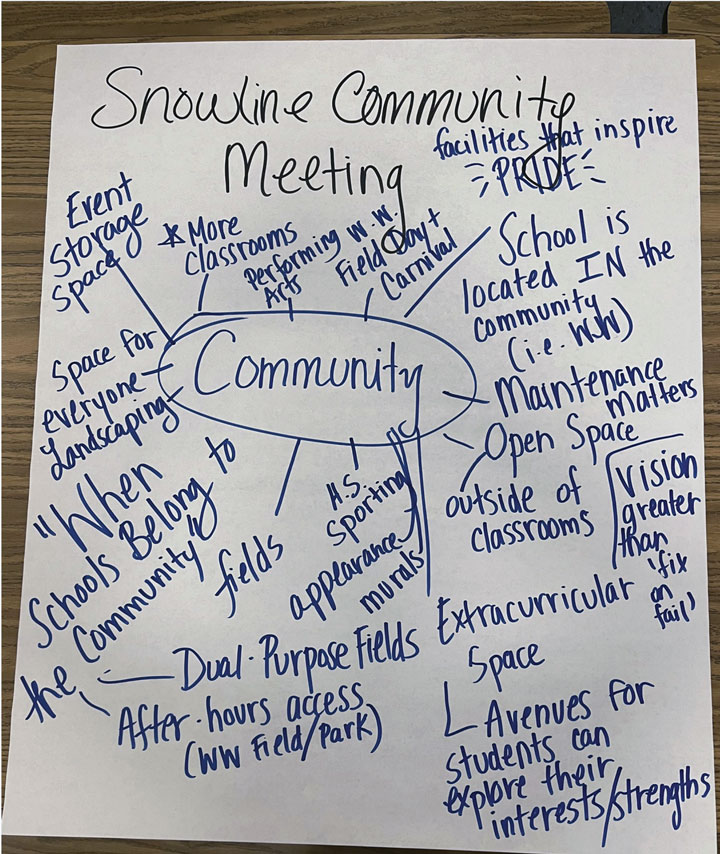
Over several months, the district gathered feedback from parents, teachers, and community members to ensure alignment with community values. Robert Chacon, who oversees marketing, public relations, and risk management at Snowline Schools, highlighted the importance of community engagement. He noted that the district conducted multiple meetings and surveys to identify key priorities, such as removing old portables, upgrading bathrooms, enhancing safety measures, and improving career and technical education (CTE) spaces. Community feedback also led to projects focused on improving school entrances, upgrading restroom facilities, and enhancing campus security systems. Additionally, there was strong support for more green spaces and outdoor learning environments, which the plan addresses through various landscaping and site improvements.
Funding a project of this size presents significant challenges. On Aug. 5, 2024, the Snowline School Board decided to pursue a $70 million general obligation bond, Measure J, to help fund the plan. If approved by voters, the bond will be issued in phases over the next decade to cover the most urgent projects. Without this bond, the district would have to rely on general funds, limiting the scope of improvements and complicating the completion of many planned projects.
However, the potential downside of passing the bond should not be overlooked. A primary concern among residents is the possibility of higher property taxes, which could add a financial burden on homeowners. While surveys show community support for the bond, these concerns remain important. Superintendent Holman addressed these concerns, stating, “This is an investment in our students and our community. While there are costs involved, the alternative is allowing our schools to fall further into disrepair, which ultimately could be more costly.”
To mitigate these concerns, district leaders have stressed the importance of transparency and fiscal responsibility. Snowline Board of Trustees President Marcus Hernandez emphasized this commitment, stating, “Half a billion dollars is a lot of money. We need to make sure every penny goes toward making our schools better for our students and community.”
The district recognizes that the $70 million general obligation bond will not fully cover the $450 million Facilities Master Plan. To address this gap, administrators are considering additional funding options, such as state matching grants and public-private partnerships. While these funds have not yet been secured, obtaining them will be vital to completing all of the proposed projects.
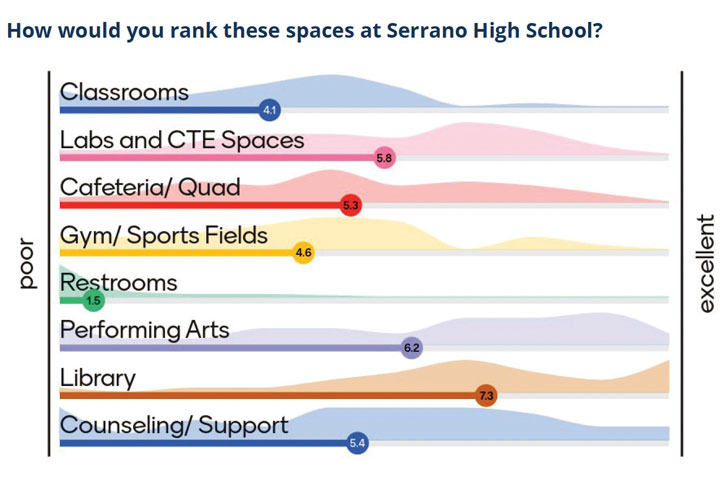
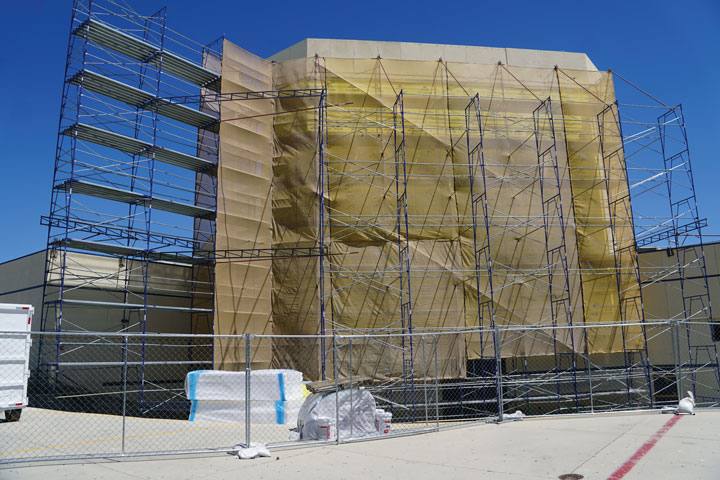
The Library and Performing Arts Center was viewed favorably by Students. Photo credit: Snowline Schools
Representatives from PBK Architects Inc., who helped develop the plan, noted that the success of major projects, such as replacing portable classrooms with permanent structures, upgrading HVAC systems, and creating outdoor learning spaces, will depend on securing these additional funds. Without them, necessary improvements at schools like Serrano, Phelan, and Wrightwood Elementary could be affected, potentially impacting the district’s ability to meet its future goals.
Additionally, the district has allocated $10 million from one-time COVID relief funds to address urgent needs, such as replacing water lines and upgrading fire alarms. However, this amount only covers a fraction of the proposed upgrades, making it clear that securing the bond and additional funding sources is crucial for the full implementation of the plan.

The 2024 Facilities Master Plan involves physical improvements to update and modernize the district’s facilities. The district aims to ensure transparency throughout the implementation process, keeping the community informed and engaged at every step. Superintendent Holman described the plan as “our vision for the future of Snowline Schools. It’s about creating spaces where students can succeed, where teachers have what they need, and where our community can take pride in our schools.”
As the district prepares for the November vote on bond Measure J, the outcome will significantly impact the ability to implement these improvements. Whether the bond is approved or not, the decisions made will shape the future of Snowline Schools and the community, determining the quality of education and community growth for years to come.