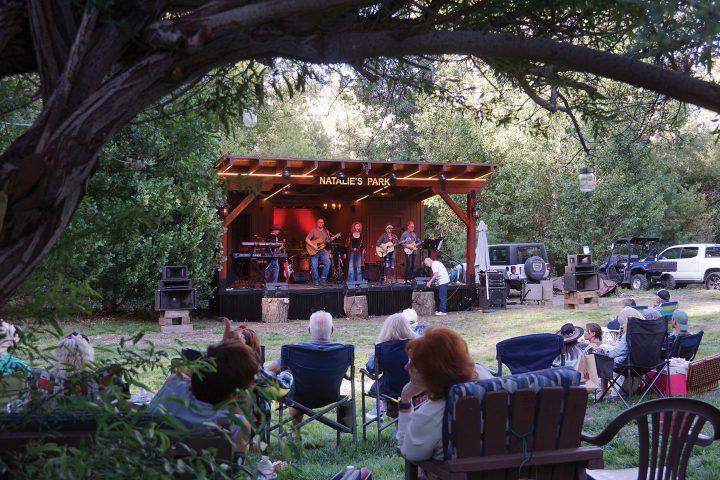
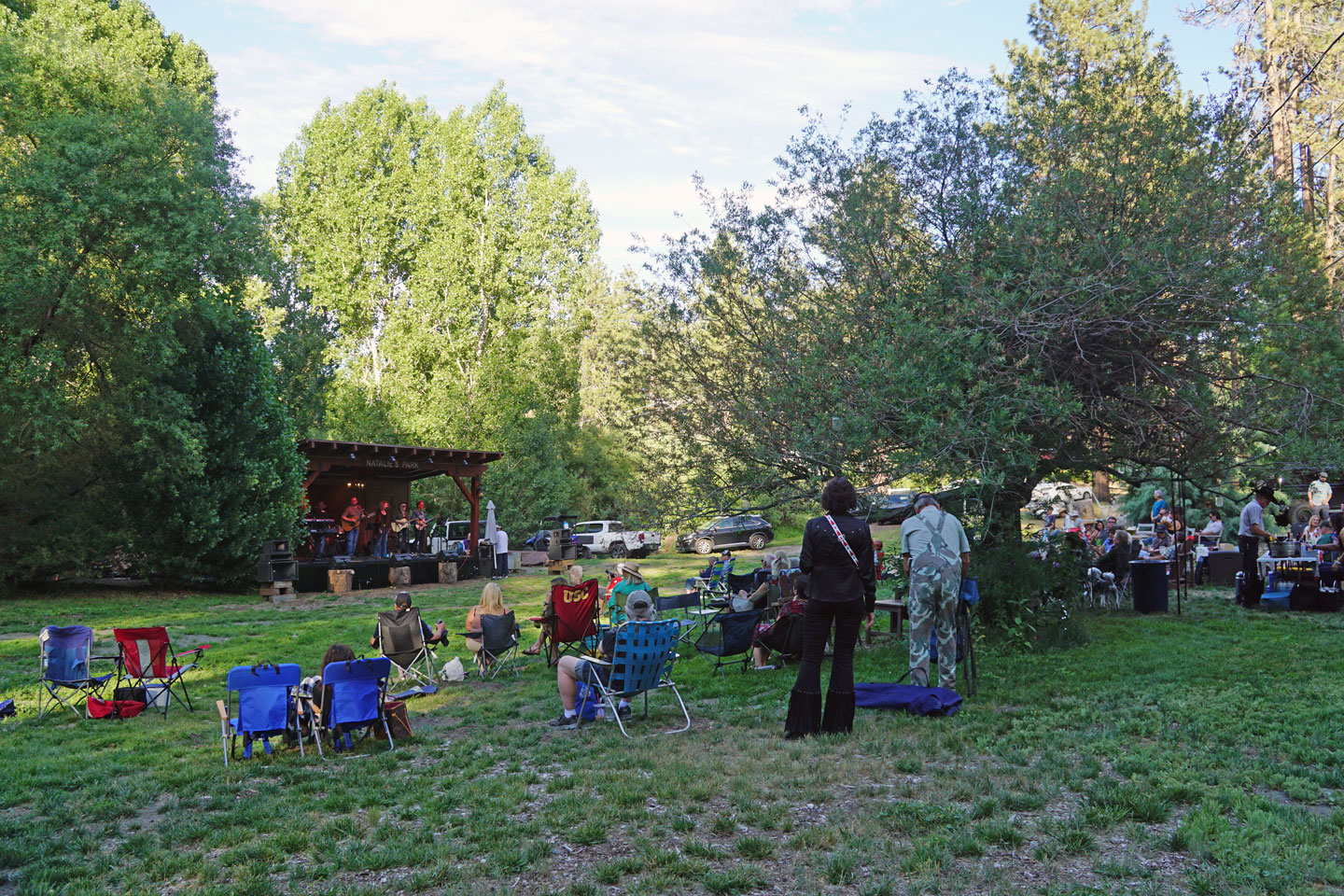
Music drifted through the mountain air as the sun ducked behind the pines, casting a golden hue over the crowd gathered in a quiet meadow in Wrightwood. Tonight marked the official opening and ribbon-cutting ceremony at Natalie’s Park. Dozens of neighbors, friends, and local musicians gathered around folding chairs, blankets, and a hodgepodge of lawn furniture, their faces lit not just by the warm evening light but by something deeper.
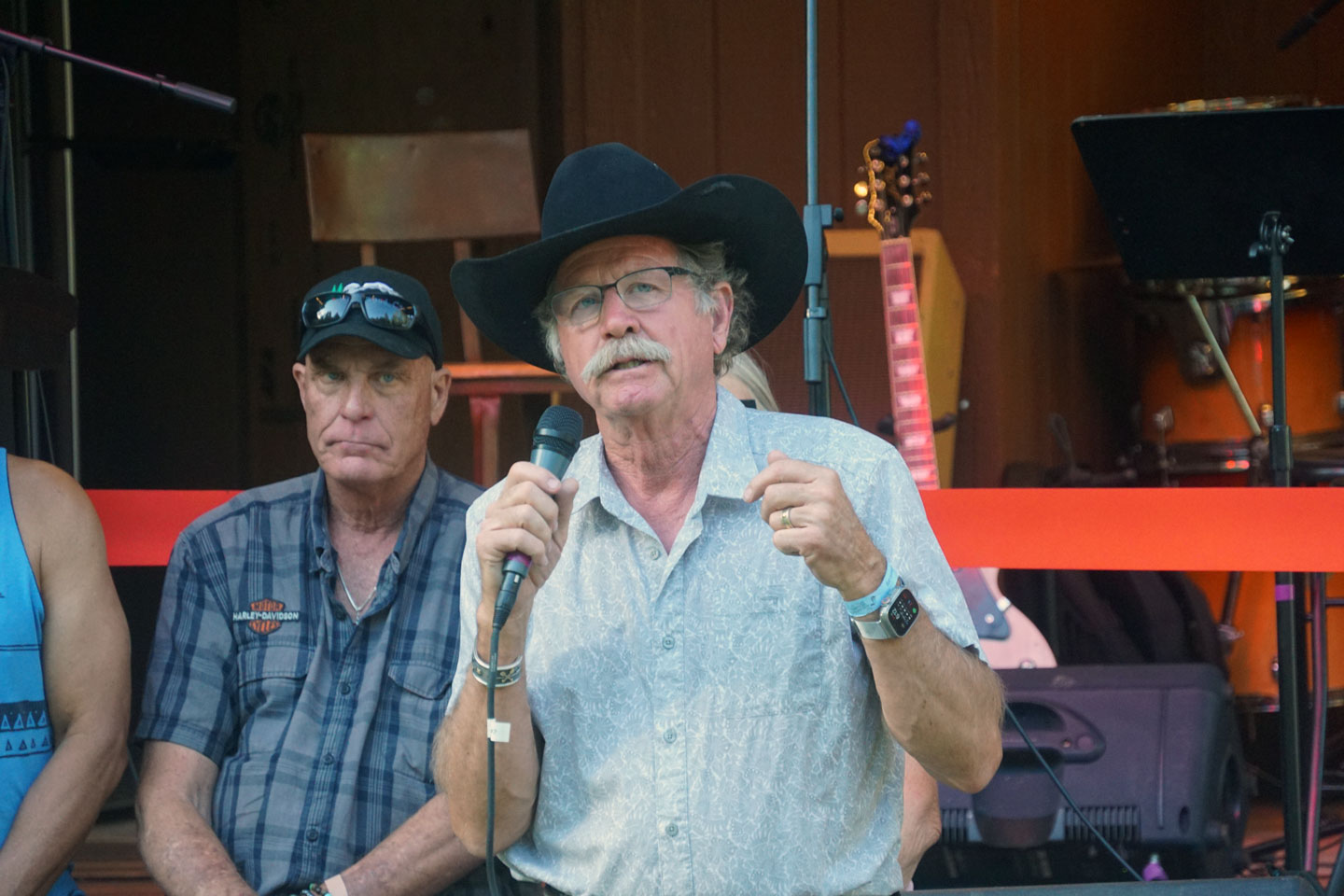
Onstage, Greg Jones, president of the Wrightwood Blues Society, stood before the microphone, surrounded by guitars and cables, his voice steady but full of emotion. “This event brings us together as one family,” he said. “I call it the miracle of Mark.”
A few in the audience quietly laughed, with some nodding and some dabbing their eyes. Behind him, the brand-new Wrightwood Blues Society Pavilion stood, twinkling with LED lights, framed by timbers, and surrounded by land that had once been overgrown and forgotten.
But tonight, it was something more — Natalie’s Park, not made for profit or backed by donors, but built from grief, determination, and love.
On Dec. 16, 2023, the unthinkable happened when Natalie and her husband, Scott Tenzer, were driving home along the Pacific Coast Highway near Oxnard after performing at a local gig in Ventura. Natalie was a passionate early childhood educator; Scott was a keyboardist and studio musician. They lived in Malibu and had made the drive up and down that stretch of highway countless times.
But on that night, they never made it home.
A northbound driver, later reported by the CHP to have been drag racing at over 100 mph, lost control of his vehicle, crossed a wide grassy median, and collided head-on with their car. Scott died at the scene. Natalie succumbed to her injuries the next day.
She was just 48 years old. A beloved daughter, wife, sister, and educator, Natalie spent her life championing inclusion, laughter, the simple magic of play, and friendship development for children with autism. She was the kind of person who made you feel seen. The kind of person a community remembers.
The crash left a silence; the kind that pauses conversations, in music not played, in moments Natalie would have filled.
But in that Wrightwood meadow, on this evening, that silence was answered with sound. As guitars were tuned and lights flickered to life, Mark Stafford, Natalie’s father, took the stage.
His voice wavered slightly. For a moment, he hesitated, eyes scanning the structure he’d built with his own hands, a stage that had become a tribute, a place for healing.
“Larry broke his hand. I broke my back,” he said quietly and full of emotion. “But we kept going.”
He thanked his friend Larry Teabrook, who helped trench the irrigation lines and lay pipe. He acknowledged contractor Chris Duran, who stepped in when both men were injured. He nodded to Tommy Dowling, the sound engineer who ran power and wired the stage like a touring pro. And he turned toward his wife. “Marie hasn’t seen me in three months,” he said, drawing a small laugh. “I’ve been here, working on this.”
Then he paused, looking out over the now lush green grass filled with fans of music. “You don’t build something like this alone,” he said. “It really did take a village. And Wrightwood is a village.”
Before it was a park, the property was little more than a patch of land thick with brush, cottonwoods, and memories. Locals once called it Wright Lake. It was a sag pond formed by the San Andreas Fault, where residents gathered to beat the summer heat. In time, the water disappeared, and the place was slowly reclaimed and became overgown with little left of what it once was.
Mark Stafford saw something different.
Across the street from his home, the land felt both empty and full of potential. “We didn’t ask for donations. We didn’t ask for flowers,” he said. “I just wanted to do something that lasted.” He wanted to do something for Natalie.
He also wanted to give something back to the community that had quietly come together to support his family after the crash, as well as to the Wrightwood Blues Society, which had welcomed him and Marie when they moved to town a few years prior.
So he started with what he had.
That first summer, they hauled in a 22-foot flatbed trailer and parked it in the middle of the lot. A few folding chairs, a handful of musicians, and an open mic later, Natalie’s Park had a pulse.
“It was a proof of concept,” Mark said. “And it worked.”
They did it again. And again. And when the last performance of the season wrapped, Mark turned to Greg Jones and said, “We need a real stage.”
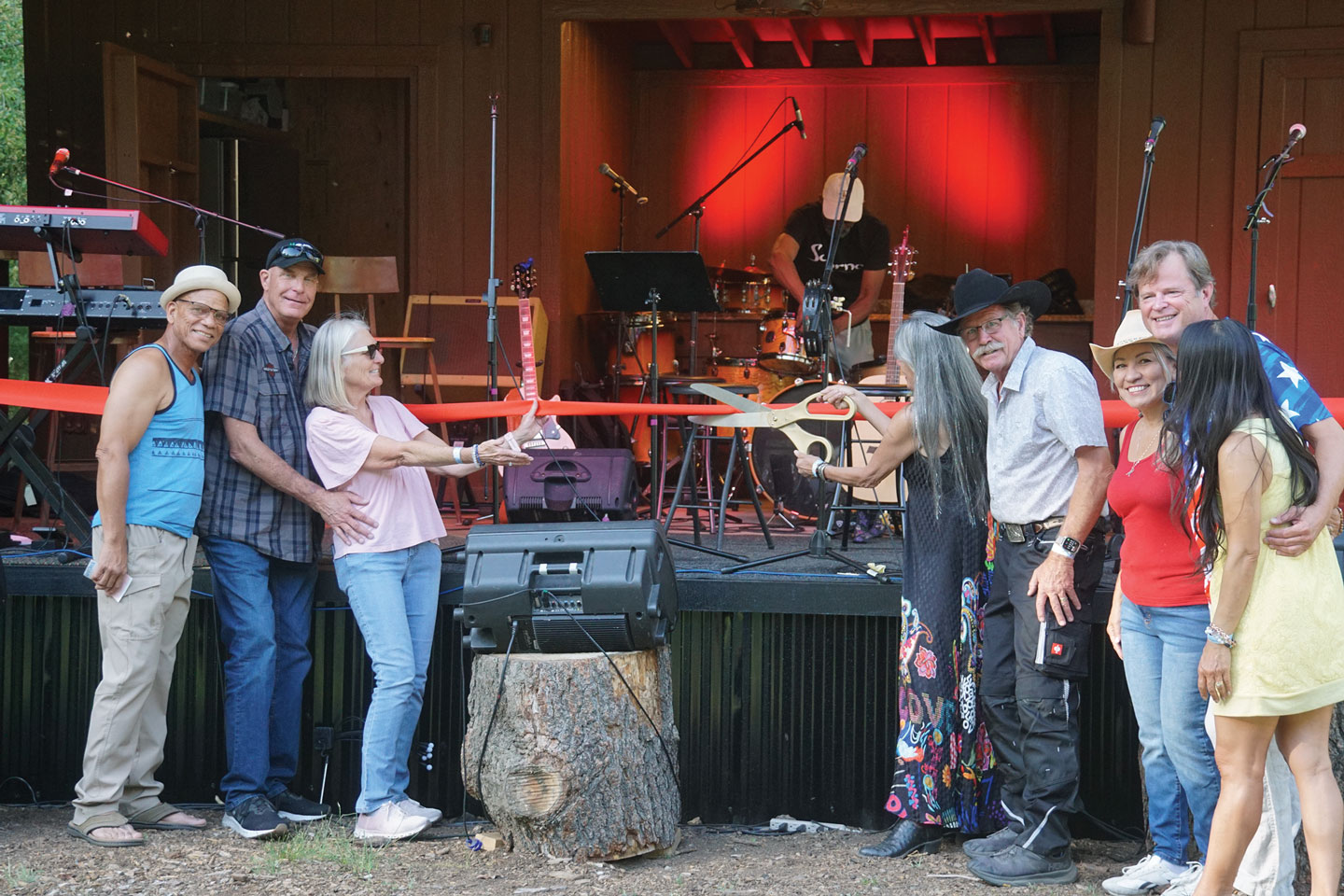
The sky deepened to blue as the first notes of live music spilled across the lawn, rippling through pine branches and settling over the quiet crowd.
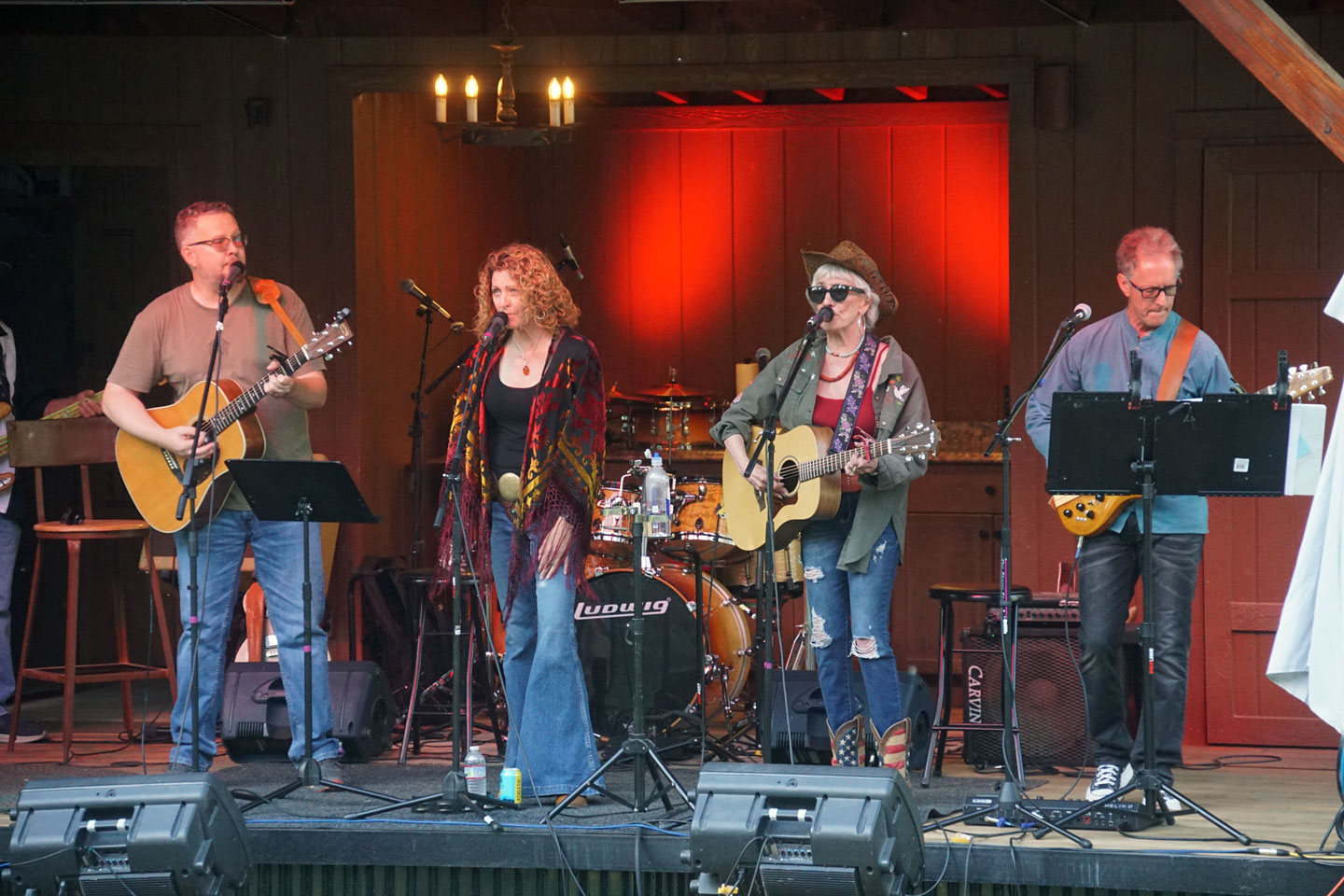
Onstage, a local trio tuned up while the stage crew was working out inevitable technical bugs. Greg Jones appeard and introduced the trio with a grin and a nod. Strings began to shimmered under the glow of stage lighting as they began to jam.
The stage itself seemed to come alive with each note. Mark and his crew hadn’t just built a platform — they had willed it into being. Two custom-built flatbed trailers, joined with precision, anchored with massive timbers and 12 industrial jacks, now stood as one seamless stage topped with rustic wood roof and all the features musicians expect. It wasn’t just functional. It was resilient.
“It’s built like a tank,” Mark said. “But with a lot of heart.”
Before the sound system was tested, before the lights were strung or the grass was seeded, there was just uneven, stubborn ground overgrown with thicket. But Mark Stafford showed up anyway. Day after day. Sometimes with help, sometimes alone.
“Every time Greg drove by, and he drives by a lot, he’d see me out there,” Mark said with a half-smile. “For months.”
Every detail was chosen with care, from the chandeliers to the LED lighting to the small fridge tucked behind the stage. Not to impress, but to invite. The space wasn’t just built for music. As Mark saw it, it was meant to be a gathering place — for people, for stories, for connection.
By midsummer, it was clear: Natalie’s Park was more than just a project. It was becoming a place.
The venue isn’t open to the public in the traditional sense. It’s operated through the Wrightwood Blues Society. Attending an event requires either a membership or an invitation because of liability rules and insurance concerns.
Still, none of that has slowed the momentum.
“We’ve definitely seen an uptick in Blues Society membership,” Greg said. “People are joining. Members are inviting friends. And folks are showing up, week after week. Not just to listen, but to be part of something.”
That something feels different from other music events in town. It’s not Music in the Pines – a beloved annual event or a bar gig with snowboarders fresh off the mountain. It’s quieter. More intentional. You’re on a lawn, under trees, with music that surrounds you.
And people aren’t just attending. They’re supporting with donations, with setup help, with word of mouth. A suggested $10 contribution at the gate helps fund the music. But it’s not the money building this place.
It’s the belief.
“We think we have a real chance to create something that’s never happened here,” Greg said. “An experience. A experience people will remember.”
And so far, they do. They show up. They clap. They come back. They bring others.
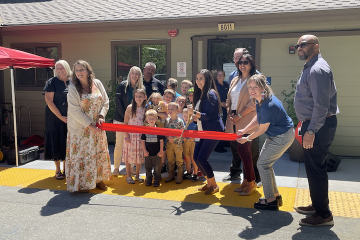
Earlier in the night, a simple ribbon stretched across the front of the new stage. When it was cut there was applause, a few tears, and a couple of camera flashes. It marked more than just the opening of a venue, it marked a turning point. What started as grief had become something lasting.
As the evening wore on and the stage lights dimmed, there was a brief, quiet moment when the music faded just enough to feel the weight of it all. Mark sat near the edge of the crowd, eyes on the stage, but somewhere else entirely.
“I ask my wife almost every week,” he said. “Would Natalie be proud of us?” The answer is already there in front of him.
Natalie Stafford was more than a daughter, a wife, or a musician’s partner. She was a teacher, an advocate, and a force of care and inclusion. After earning her master’s degree in early childhood development and certification in applied behavior analysis, she spent more than 20 years working with autistic children and young adults.
“She made the world better,” Mark said, “and she didn’t need to tell people that. She just did it.”
Marie and Mark could have been consumed by silence after their loss. But instead, it sparked something profound. Although Natalie is no longer here to hear the music, her spirit lives on in every note that resonates from the stage, in each new member who walks through the gate, and in every child who dances on the grass.
Mark said, “If she could look down and see all her friends together in one place, I think that would be wonderful.”
And maybe, in her own quiet way, she already has.
As twilight settled over Wrightwood, the last chords of the night faded into the trees. People lingered, not quite ready to leave, not quite ready to let go of the evening.
Natalie’s Park wasn’t built for recognition or applause. It was built for the kind of moments that happen when someone believes in something and others believe with them.
The pavilion will continue to host Blues Society open mic nights, weather permitting. But its future is open-ended. Weddings, charity concerts, even comedy nights are all possible, so long as they honor the spirit behind it.
“It’s members-only, but that doesn’t mean it’s exclusive,” Greg Jones said. “If you love music, if you love what we’re about, just come. Join. Be part of it.”
The Tri-Community already has. With every performance, with every new volunteer, with every chair placed on the lawn, the story continues.
Not everyone in the crowd that night knew Natalie Stafford. But by the time the music stopped, they understood something about her. As the night settled in, Mark asked quietly, “Would Natalie be proud of us?”
And now, just off a quiet Wrightwood road, her legacy lives on — in every song, every night, every gathering.