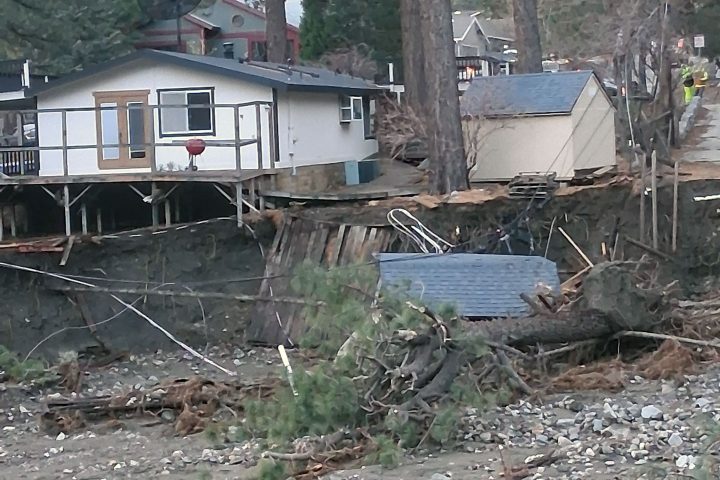
On December 24, 2025, Wrightwood, Phelan, and Pinion Hills experienced remarkable damage from a destructive winter storm. Community members in Wrightwood have experienced significant damage, including house flooding, vehicle damage (or even totaled vehicles), and loss of power and electricity.
Wrightwood resident Miss Chang, who was interviewed by CBS LA, had experienced major property damage when her house flooded and now contains piles of dirt up to 4 feet high. Other residents experienced their vehicles stuck in mud up to 3 feet high. It’s heartbreaking to see and experience the damage that occurred in Wrightwood firsthand.
But since December 27th, Wrightwood has begun reconstruction from the storm and has seen improvements in many areas, including the restoration of Mountain High Resort, the reopening of Highway 2, and the removal of debris. As of January 6th 2026, Wrightwood was released from critical flooding conditions.
One thing this recovery process highlights is just how much it matters where a home sits on the map. This is essentially what flood zones try to help with by predicting how often a flood can happen. Understanding flood zones is actually a huge part of recovery, because it determines how you’re allowed to rebuild.
So, what is a flood zone? According to FEMA, a flood zone is an area that is at risk of experiencing a flood, specifically within 30 to 500 years. There are also different flood zone types, which include High-Risk Areas, Moderate-to-Low Risk Areas, and Undetermined Risk Areas.
Why does this matter? At least every five years, FEMA checks to see if flood zones have changed. Although flood zones are expected to change at 20-year intervals, FEMA flood zone maps are updated every five years. That means your flood zone area can change over time, but what do the different flood zones mean? According to floodsmart.gov, “Flood zones are given alphanumeric designations, such as zone A, B, or C. The areas that have the highest risk of flooding are largely zones that have the letter A or V in their name, such as zone A, zone AR/AE, zone VE, or zone V30. Areas that have a moderate flood risk are labeled zone B or X (but only zone X on maps that are shaded). Finally, areas with the least risk of flooding are areas outside the SFHA; they’re zone C or X (but only zone X on maps in areas that are not shaded).” With that said, if your zone is Zone AH, this means this is a high-risk flood zone that is high risk with a 26% chance of flooding over a 30 year mortgage, has a 1% chance of annual flooding with a depth ranging from 1 to 3 feet, and this flood zone area requires flood insurance if you have a federally backed mortgage. I’m sure by now you are curious how to identify what type of flood zone you have, that’s why I created these instructions below:
How to Check if You’re in a Flood Zone
To begin, first open your web browser and type in your search box “FEMA Flood Map Service Center.“ Open the FEMA flood map, type in your address, and it will display on the map whether or not you are in a flood zone.
An easier way is to type in or click this link: https://msc.fema.gov/, which will take you directly to the website. After that, there will be a box that says “Enter an address, a place, or longitude/latitude coordinates.” Simply enter your address, and the map will show you if you are in a flood zone based on the map key displayed at the bottom of the map.
Some residents in Wrightwood have been attempting to reach out to their insurance providers, while other residents, like Miss Chang, didn’t have insurance at all and now have to come out of pocket to pay for any damage that has occurred to their home. Which raises the question, what does home insurance actually cover? Your home insurance coverage varies depending on your insurance plan. For example, if you have a Dwelling Coverage plan, it will cover the cost to repair or rebuild your home’s physical structure, including walls, roof, and foundation. Below are summaries of various types of insurance plans.
Dwelling Coverage
- Pays to repair or rebuild your home’s physical structure (walls, roof, foundation) if damaged by a covered event (like a fire, hail, or storm)
Other Structures Coverage
- This plan covers detached structures on your property, including but not limited to: sheds, fences, or garages, against covered perils.
Personal Property Coverage
- This plan protects your belongings (furniture, clothes, electronics) from theft, fire, vandalism, and other covered losses.
Personal Liability Coverage
- This protects you if you’re found legally responsible for someone else’s injury or property damage on your property, covering legal costs and settlements.
Medical Payments to Others coverage
- Covers minor medical bills for guests injured at your home, regardless of fault, like a slip-and-fall, helping avoid lawsuits.
Additional Living Expenses (ALE)
- Pays for temporary housing (hotel, rental) and increased living costs if you can’t live in your home due to a covered loss.
According to Farmers Insurance, They say “…many standard home insurance policies cover damage caused by 16 common perils: Fire or lightning, Windstorm or hail, Explosion, Riot or civil commotion, Aircraft, Vehicles…” in other words you can file for a claim when, and if your insurance covers these incidents when they occur to your home.
What does FEMA actually do in a disaster?
FEMA, also known as the Federal Emergency Management Agency, helps in many ways during a disaster. Although FEMA may be known for its primary purpose, to help communities prepare and recover from any natural or man-made disaster, it does not assist the community that is recovering from a natural disaster until the state can no longer handle the situation financially, or the governor calls upon FEMA for assistance. After FEMA is activated in the state, it begins to help the recovering community in one or more of the following ways:
- Through individual assistance(this helps survivors with immediate needs, including rental assistance, home repairs, and financial support for medical or funeral expenses),
- Public assistance (FEMA will reimburse the state, tribal, and local governments for emergency response, debris removal, and restoring public infrastructure),
- Recovery coordination (FEMA will deploy staff, set up incident command structures, and organize federal resources.)
- Disaster risk reduction: Provides grants to help communities rebuild in ways that reduce future disaster damage.
Note: FEMA must be activated by the state first in order to do all of the actions listed above.
As of now, residents of Wrightwood are eager to return to normal, as the Tri-Community looks forward to the town being restored as it was prior to the storm.