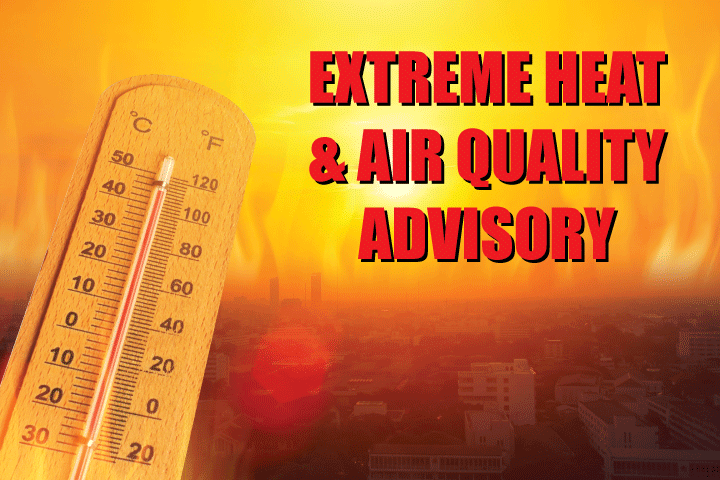
San Bernardino County Health Officer Dr. Michael Sequeira has issued a heat advisory, and the Mojave Desert Air Quality Management District (MDAQMD) has warned of poor air quality due to extreme temperatures and fireworks. These advisories are expected to remain in effect through the week and into the weekend.
Sequeira urges the public to take precautions during heat waves to prevent heat-related illnesses. “The summer heat can be dangerous, and everyone should take the right steps to stay safe,” Sequeira said. “Heat-related illnesses like heat exhaustion and heat stroke can be very serious, especially for those who are more vulnerable.”
Residents are encouraged to learn the warning signs and symptoms of heat-related illnesses and take preventive measures to avoid serious health effects. Recommendations include staying in air-conditioned buildings and limiting outdoor activities, especially during the hottest part of the day. A list of cooling centers is available on the San Bernardino County Cool Places to Go San Bernardino County Cool Places to Go website or by dialing 211. Seniors can contact the Senior Information and Assistance Hotline at 1-800-510-2020.
Proper hydration is crucial during extreme heat. Health officials recommend drinking more water than usual and not waiting until thirst sets in. Those working outdoors should consume two to four cups of water every hour.
Pet owners are reminded that animals are also vulnerable to high temperatures. Signs of heat distress in pets include heavy panting, difficulty breathing, lethargy, excessive thirst, and vomiting. The county advises never leaving infants, children, or pets in parked cars, even with windows open, as temperatures can quickly rise to dangerous levels.
In addition to the heat advisory, the MDAQMD warns of potentially poor air quality from July 3 to July 9, 2024, across its jurisdiction due to excessive heat and fireworks.
Ground-level ozone concentrations are expected to rise due to a heat wave sweeping across California, potentially pushing air quality into the “Red – Unhealthy” category on the Air Quality Index. “At this level, anyone may experience health effects,” the MDAQMD states. “Those with respiratory illnesses, children, seniors, and active adults are more likely to experience health effects.”
Residents are advised to check the Air Quality Index before venturing outdoors, using resources such as MDAQMD.ca.gov, AirNow.gov, or smartphone weather apps.
In addition to ozone concerns, the MDAQMD anticipates increased levels of PM2.5 on July 4 and 5 due to commercial fireworks displays and illegal backyard fireworks. “Fireworks are known to emit high levels of PM2.5 and PM10, as well as metal air pollutants, all of which can contribute to negative health effects,” the advisory notes.
Breathing high levels of fine particulate matter can lead to various cardiovascular and respiratory health issues, including heart attacks, asthma aggravation, and difficulty breathing. To mitigate health risks, the MDAQMD recommends avoiding vigorous outdoor or indoor exertion in areas with poor air quality. Other precautions include staying indoors, keeping windows and doors closed, and using air conditioners with recirculation functions rather than swamp coolers or whole-house fans.
The MDAQMD may extend the advisory based on National Weather Service forecasts and air quality predictions.